Lost Valley Observatory and Astrophotography by Keith Quattrocchi


First Light for the Lost Valley Observatory occurred on June 3, 2007. 


Images

Observatory Construction

Publications

Previous Links for the
Lost Valley Observatory
(early RC and archived):

MAS (Maine Astronomical Socieity) Observatory

MAS Observatory Image Gallery: RCOS-16 Ritchey-Chretien

MAS Observatory Image Gallery: Takahashi 106 FSQ

Articles and Reviews

Archived Meade LX-200 Images

Purchase Prints

Contact Me


    Welcome to the homepage for the Lost Valley Observatory.  This observatory (my third) is located on a site at Sierra Remote Observatories, in the Sierra Nevada Mountains of California.  Sierra Remote Observatories is located between Yosemite and Kings Canyon, at a heigth of 4600 feet, where the seeing conditions are excellent (averaging 1-2 arc-sec, often sub arc-sec). For more information about this multi-observatory site please go to www.sierra-remote.com
   This website contains information on this current project as well as images and information from my prior observatory, which was located in Maine (MAS Observatory).  I hope the information and images will be helpful to other amateur astronomers and those with an interest in astrophotography.  The links to the left will take you to information about my observatories (past and present), and to images and articles.
   The first three links on the left contain information about this new observatory and images from the Sierra Mountain Site.  Below the first two links are links to images and information from the MAS Observatory (my previous observatory in Maine), which was closed in July of 2006.  Below these links are other links to images from the MAS Observatory (utilizing the RC or Takahashi 106 FSQ and Paramount ME), to articles and a few archived images from years ago.  I hope you enjoy the site. 
 
This site is updated on a weekly basis.


.


bestcroppelican.lrprgbandnarrowluminosityextracurveandkodacagain.jpg
Combined LRGB/Narrow Band Image of the Pelican Nebula in Cygnus

Why amateur astronomy ? 
Not to get "carried away", but this image reminds me of  what first drew me to this "hobby" and to astronomy in general.  In a way analogous to other times in life, when looking into the sky there are unexpected sights which are invisible or nearly so.  At night we may see an area highlighted by nothing more than a small and generally blurry point of light, or perhaps nothing at all.  After hours of imaging and toiling over the computer, a stunning image appears.  In this case the Pelican Nebula, a complex emission and absorption nebula in Cygnus.  For me, it is an inspiring site and a reminder of what perspective means. 
..........................................................................................................................................


A Note About Imaging and this Website:
I hope you enjoy this website.  The links are designed to take you through the history of my observatory (in some depth), to various image galleries, and to a few articles.  Building a fully robotic observatory with a solid mount and superb optics has been the fulfillment of a lifelong dream of mine.  Each of these images generally represents data collected over several nights of imaging and many hours )usually 10-20) of processing.  Each imge is a labor of love and generally lessons are learned with every image.  Half the "fun" is the never ending "learning curve" which this "hobby" demands. 

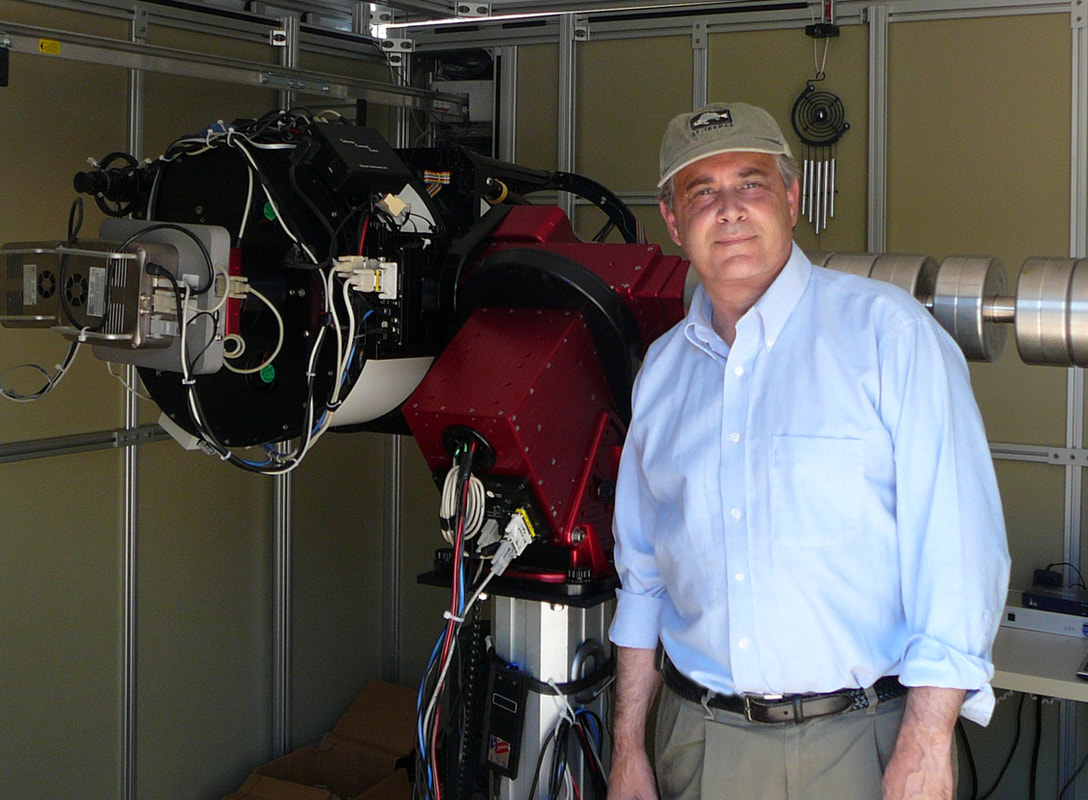
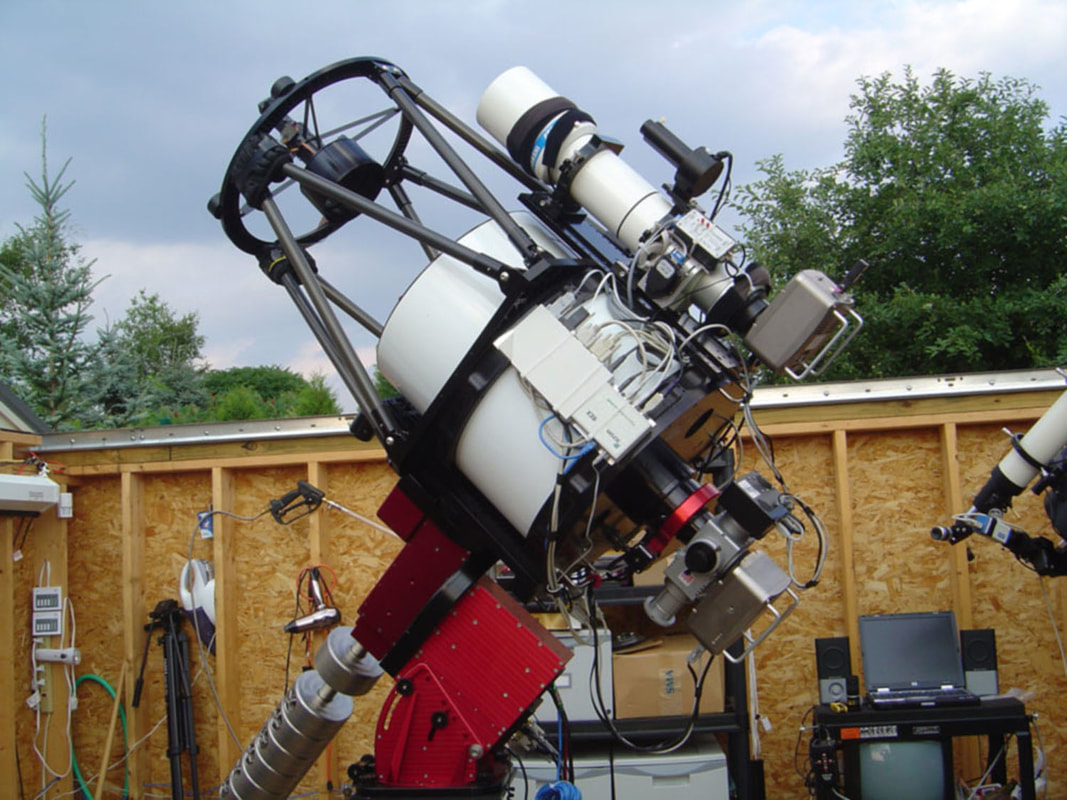
Fully Remote RCOS 16"/Paramount ME/STL-6303
lostvalleyobservatory.jpg
This same telescopescope, with adaptic optics, will be placed in the Lost Valley Observatory


Current Imaging Conditions for the Lost
Valley Observatory:

NOAA Weather (Lost Valley Observatory)

NOAA Animated Weather Map

North American Jet stream

Current Lunar Phase

Local Universal Time (Official USA)

.
.
.
.
 

16 Step Greyscale Image for Optimal Viewing

16.step.greyscale.jpg

In order to properly view the images on this site your monitor needs to be standardized, otherwise the images you view may look VERY different than those others see.  To do this, be sure the 16 greyscale gradations in the above image are distinct.  If they are not, adjust the brightness and contrast of your monitor until they are.  Proper color calibaration of your monitor (e.g., use of PhotoCal or other monitor standardization tool) should standardaize color and the "greyscale" of your monitor.    

web tracker